
PLC & Network Integration Systems
Connect scales, indicators, controllers, PLCs, HMIs, plant networks, labeling systems, and production software so weight data can do more than sit at the scale.
Turn Weight Signals Into Production Control
Many scales are still treated as isolated checkpoints. An operator reads the display, writes down a number, keys the same data somewhere else, or relies on a timer, pressure sensor, or manual decision to stop a process.
Michelli helps customers bring weight data into the control layer of the operation. That may mean continuous output from a tank scale to a PLC, integration with a central PC, automated shutdown based on real weight, label printing, production reporting, or communication with SCADA, MES, ERP, and inventory systems.
- Real-Time Weight Signals
- PLC & Network Communication
- Automated Control Logic
- Reporting & Label Data
Continuous Output
Use scale hardware and indicators that can feed live weight data to a PLC, PC, controller, or plant network.
Control Integration
Trigger shutdowns, alarms, gates, conveyors, filling equipment, or production steps based on actual weight instead of assumptions.
Network Connectivity
Support communication paths such as Modbus, Ethernet/IP, DeviceNet, serial, or other protocols based on the equipment and site requirements.
Shared Data
Move production, label, inventory, and quality data into the systems that need it so teams are not chasing the same number twice.
Standalone Scale Data vs. Integrated Scale Data
Not every scale needs to be networked. But when weight affects machine timing, production flow, inventory, labeling, or reporting, an integrated system can turn the scale into an active sensor inside the operation.
Local Scale Point
Standalone Scale Data
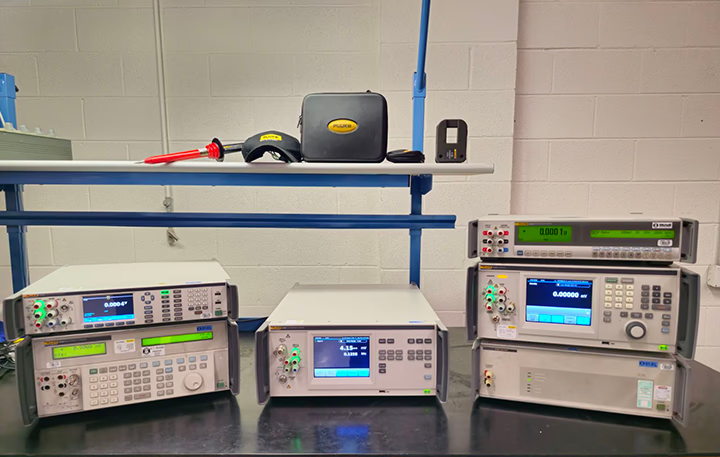
A standalone scale may be the right answer when an operator simply needs a reliable weight display, a local record, or a manual check. It is straightforward, serviceable, and often appropriate for isolated tasks.
Local weighing with limited automation requirements
Operator-led checks, logs, or quality samples
Processes where network connection does not improve the workflow
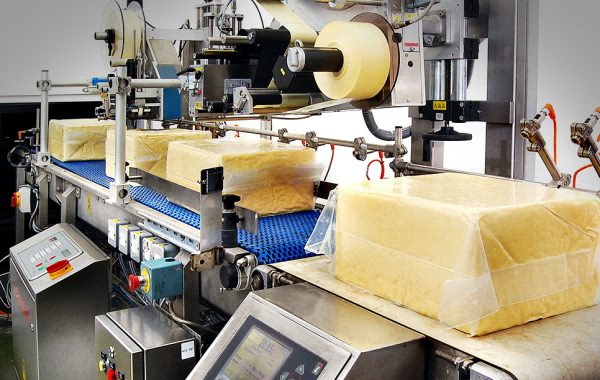
Connected Control Path
Integrated Scale Data
Integrated systems use the scale as a live sensor for production control and business data. Weight can trigger machine actions, update labels, feed reports, and support centralized management.
Automated shutdown, fill, conveyor, or production timing logic
PLC, PC, HMI, SCADA, MES, ERP, labeling, or inventory connection
Real-time visibility across lines, tanks, batches, and production areas
When Scale Data Stays Trapped at the Indicator
Scale data becomes more valuable when the operation needs to act on it. If a line is still running on timers, pressure sensors, handwritten logs, or delayed data entry, the scale may already know something the rest of the plant cannot see.
Michelli helps identify where weight should become part of the control strategy. The right answer may be a simple communication output, a controller upgrade, a PLC connection, or a more complete networked system with reporting, labels, and centralized visibility.
Warning Signs
Common Signs to Look For
Timed Fills or Shutdowns
Automated equipment runs on time, pressure, or volume when actual weight would be more accurate.
Repeated Manual Entry
Operators read the display and type the same weight into production, quality, inventory, or label systems.
Machine Timing Drift
Small timing changes create overfill, underfill, rework, downtime, or inconsistent batch results.
Limited Line Visibility
Managers cannot see live tank levels, production totals, batch status, or line performance from one place.
Label & Report Gaps
Labels, production records, or inventory updates depend on separate systems that do not share weight data.
New Equipment Needs Scale Input
A conveyor, batch system, HMI, or PLC project needs reliable continuous weight data to function correctly.
Where PLC & Network Integration Systems Fit
Integration opportunities show up anywhere weight needs to guide a machine, confirm a process, update a system, or give teams better visibility across production.
Tank & Vessel Monitoring
Use tank scales or weigh vessels to provide real-time levels for production timing, material availability, and process synchronization.
Real-time tank level visibility
Material availability signals
Process synchronization
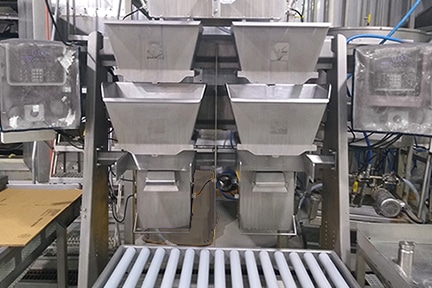
Automated Shutdown Control
Trigger machine shutdowns, cutoff points, or alarms using actual weight rather than timer-based or pressure-based assumptions.
Weight-based fill cutoff
Alarm and relay outputs
Reduce overfill and underfill
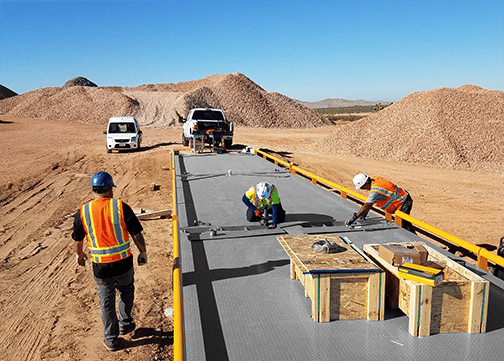
Conveyor & Line Integration
Feed scale signals into conveyor, packaging, filling, or production lines that need live weight to control movement or verify output.
Live weight to line controls
Packaging and filling sync
Output verification
PLC, HMI & SCADA Projects
Connect weighing equipment to control screens, supervisory systems, and facility-wide monitoring tools so weight is visible where decisions are made.
PLC and HMI communication
SCADA visibility
Protocol matching
Labeling & Production Reports
Use weight data to drive labels, production totals, batch records, inventory updates, and reporting workflows automatically.
Label printing from weight
Batch and production records
Inventory and ERP updates
Legacy System Upgrades
Evaluate whether existing scales, indicators, or controls can be upgraded to communicate with newer software and network systems.
Indicator or controller upgrades
Communication protocol retrofit
Protect existing hardware investment
SYSTEM COMPONENTS
What Goes Into a PLC & Network Integration System?
Michelli helps connect the scale hardware, communication path, control logic, and data outputs to the way your operation actually runs.
A strong integration is built around the decision the system needs to make: stop it, start it, fill it, label it, record it, or share it. Michelli helps match the scale, indicator, controller, protocol, and support plan to that workflow.
Scale Hardware & Continuous Output
Tank, hopper, floor, platform, or conveyor scales configured to provide reliable weight data to the control system.
Indicators, Controllers & I/O
Indicators, transmitters, relay outputs, analog signals, digital I/O, or controllers selected for the required data path.
Communication Protocols
Modbus, Ethernet/IP, DeviceNet, serial, analog, or other communication methods matched to the plant controls.
PLC, HMI, SCADA or PC Connection
Integration with the control screens, supervisory tools, or central PC systems operators and managers already use.
Labels, Reports & Inventory Data
Outputs for label printing, production reporting, inventory software, and quality records when the workflow requires it.
Service & Calibration Plan
Ongoing support so the scale side of the integrated system stays accurate, stable, and serviceable over time.
BEYOND THE SCALE
Integrated Weight Data Is Production, Inventory & Control Data
When a scale becomes part of the control system, weight can help run the line, protect the product, update the label, feed the report, and give managers visibility without waiting for someone to retype the number.
That signal can support machine timing, batch accuracy, label accuracy, inventory reconciliation, production reporting, and better decisions about where bottlenecks or errors are entering the process.
What You Gain
Potential Business Value
Better Machine Timing
Improve machine timing by using real-time weight instead of timers, pressure, or manual judgment
Less Manual Entry
Reduce duplicate data entry and reporting errors from disconnected systems
Centralized Visibility
Support centralized production, label, inventory, and quality visibility across the plant
Fewer Overfills & Errors
Reduce overfill, underfill, rework, and downtime caused by inaccurate process timing
Serviceable Systems
Keep the weighing portion serviceable with local support and calibration resources
Room to Grow
Systems designed to expand as the operation, network, or reporting needs change over time
Why Work With Michelli on PLC & Network Integration Systems?
Integration projects can fail when the scale is treated as an afterthought. Michelli helps bring weighing expertise into the planning process early so the signal, controls, data, calibration, and service requirements are considered together.
Application-First Planning
We review what needs to be controlled, what data must move, what equipment already exists, and what failure would cost before recommending a path.
Control & Network Awareness
Scale signals, communication protocols, PLC logic, PC systems, and labels all need to work together in a way operators can maintain.
Retrofit Mindset
Existing scales, indicators, transmitters, and controls may be usable with the right communication upgrades or system design changes.
Support After Install
Local service, calibration support, troubleshooting, and long-term partnership help keep the integrated weighing system working beyond launch day.
Local Service. Nationwide Support.
Michelli supports customers through a service network built for demanding weighing and measurement environments.
Calibration Support
Michelli is ISO 9001 Registered with ISO 17025 Accredited calibration laboratories, with calibration support available based on equipment and scope.
PLC & NETWORK INTEGRATION SYSTEMS
Need Weight Data Connected to Your Control System?
Loop Michelli in early. Tell us what equipment is involved, what data needs to move, what system needs the signal, and what the process must do when a target weight or condition is reached.
Helpful details to share:
- Scale or vessel type
- Current indicator/controller
- PLC, HMI, PC or software system
- Communication protocol
- Control action needed
- Label or reporting needs
Request a Solution Review
Tell us about your PLC, network, or production integration project. A Michelli specialist can help identify the right next step.