
Check Weighing Systems
Verify packages, pallets, kits, and completed orders before they leave the line or dock. Michelli helps plan static and in-motion check weighing systems that support accuracy, loss prevention, quality control, and useful production records.
Catch Weight Problems Before They Become Customer Problems
Check weighing gives operations a final verification point before product moves forward. It helps confirm that a bag, carton, pallet, kit, or order is not underweight, overweight, missing items, or outside the expected range.
The right system depends on how fast the process moves, what is being verified, what action should happen when a weight fails, and what records managers need for quality, productivity, inventory, or shipment review.
- Over / Accept / Under Verification
- Package & Pallet Accuracy
- Loss Prevention Support
- Productivity & Shipment Records
Fast Verification
Visual lamps, screen prompts, or automated pass/fail logic help operators quickly identify acceptable, under, or over target weights.
Missing Item Detection
Expected weights can help flag incomplete cartons, missing items, incorrect kits, or palletized orders that need review before shipment.
Line & Conveyor Options
Systems may be static at the end of a line or integrated into conveyors, wrappers, or production flow for more continuous verification.
Records & Visibility
Weight results, operator data, labels, reports, and shipment records can give managers a clearer view of quality and productivity.
Static Check Weighing vs. In-Motion Check Weighing
Both paths help verify product accuracy. The right choice depends on line speed, package size, operator involvement, rejection process, and how much data the operation needs to capture.
Fixed Verification
Static Check Weighing
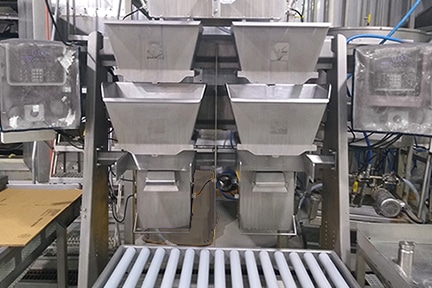
Static check weighing happens at a fixed scale or end-of-line station. An operator places the package, pallet, tote, bag, or order on the scale and receives a clear pass/fail result before the item moves forward.
Best For:
Manual filling stations, pack-out areas, and shipping verification
Products that need operator review before release
Lower-speed lines, variable package sizes, cartons, pallets, or kits
Applications that need simple visual indicators or label printing
Moving-Line Verification
In-Motion Check Weighing
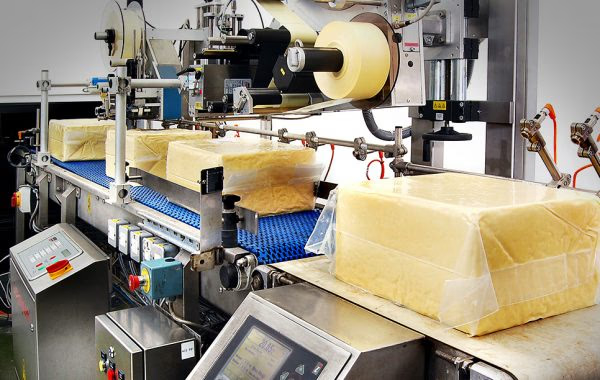
In-motion check weighing verifies products as they move through a conveyor, wrapper, or production line. It can support higher-throughput environments where every item or pallet needs to be checked without stopping the flow.
Best For:
Conveyorized production, wrapping, packaging, or distribution workflows
High-volume lines that need 100% verification or rapid exceptions
Automated pass/fail logic, alarms, reject prompts, or database records
Operations where missed items, shrinkage, or overfill creates recurring cost
When End-of-Line Weight Checks Start Missing Problems
Manual checks can work when volume is low and the process is simple. But as orders, package types, operators, and line speeds increase, weight errors can slip through as missing items, overfilled product, underfilled packages, and incomplete shipments.
Check weighing systems bring a defined target and a clear decision point to the workflow. They help teams confirm whether the product is acceptable before it leaves the station, gets wrapped, enters the truck, or reaches the customer.
Michelli starts by looking at what needs to be verified, how exceptions should be handled, what records are required, and whether a static station or in-motion system is the practical fit.
Warning Signs
Common Signs to Look For
Missing Items
Cartons, pallets, kits, or orders leave the line with incomplete contents
Overfill or Underfill
Operators struggle to keep bags, boxes, or packages inside target ranges
Route Shrinkage
Product loss, unsecured loads, or shipment discrepancies appear after loading
No Final Verification
Pallets or packages are wrapped without a recorded weight check
Productivity Gaps
Managers cannot see operator, shift, or line performance from weighment data
Weak Records
Quality, shipment, or customer teams lack reliable proof of final weight checks
Where Check Weighing Systems Fit
Check weighing fits anywhere a final weight can confirm that the right product, quantity, or load is moving forward. It can support simple operator checks, end-of-line quality control, conveyorized verification, shipment records, and loss prevention workflows.
Package & Order Verification
Confirm cartons, kits, boxes, curriculum materials, and completed orders are within the expected range before they move to shipping or the customer.
Missing item detection
Carton, kit, or order accuracy
Final pass/fail checkpoint
Conveyor & Wrapper Integration
Add weight verification into conveyorized packaging, wrapping, or pallet movement when the operation needs higher-volume checks without stopping every load.
Inline or in-motion verification
Wrapper and conveyor support
High-volume exception handling
Quality & Production Records
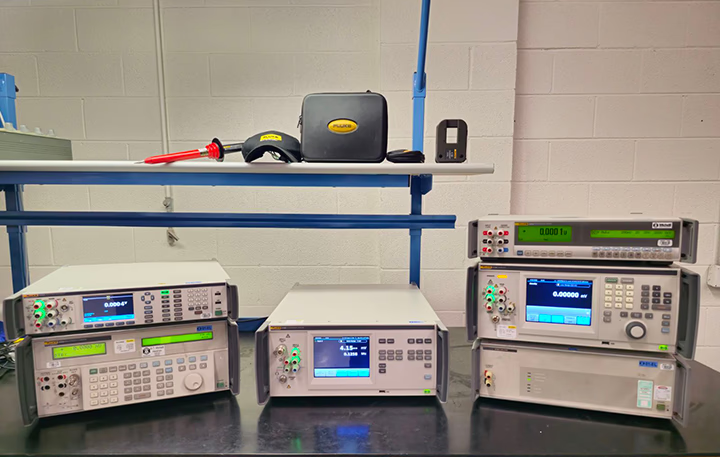
Capture useful records from the check point so managers can review pass/fail results, operator activity, shipment history, and recurring exceptions.
Operator and shift productivity
Shipment and QC records
Labels, reports, or database output
Distribution Loss Prevention
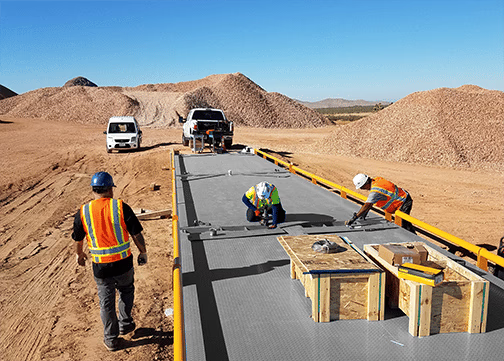
Verify pallets, loads, and outbound shipments to help reduce route shrinkage, incomplete loads, unauthorized product loss, and delivery discrepancies.
Pallet and load verification
Route shrinkage support
Balanced load and shipment review
SYSTEM COMPONENTS
What Goes Into a Check Weighing System?
Michelli helps match the right scale, controls, indicators, reject process, and reporting tools to the way the operation actually verifies product.
A strong check weighing setup is built around the decision the operation needs to make: pass it, hold it, reject it, label it, or record it. Michelli helps match the scale, controls, prompts, and data tools to that workflow so the system stays practical, serviceable, and easy for operators to use.
Scale Platform or Conveyor Scale
Static benches, floor scales, pallet scales, hopper scales, or conveyor-integrated scales selected around size, speed, capacity, and environment.
Over / Accept / Under Indicators
Lamps, displays, prompts, or audible alerts that give operators a fast, clear decision without slowing the workflow.
Product ID & Target Lookup
Barcode scans, product selections, SKU data, or stored targets help apply the correct weight range for each item or order.
Reject or Hold Process
Failed weights may trigger an operator review, stop condition, reject lane, hold area, or quality process depending on the workflow.
Labels, Reports & Records
Printers, databases, shipment reports, and productivity records can help document what passed, failed, and moved forward.
System Integration
When needed, check weight data can support quality systems, inventory records, WMS, ERP, or production dashboards.
BEYOND THE SCALE
Check Weight Data Protects Product, Shipments, and the Bottom Line
A check weighing system is more than a pass/fail station. It can become a practical control point for quality, loss prevention, worker productivity, shipment accuracy, and customer confidence.
When the system captures useful records, managers can see where variation is happening, which loads were verified, how operators or shifts are performing, and whether repeated exceptions point to a larger process issue.
What You Gain
Potential Business Value
Reduced Giveaway
Keep products closer to target and reduce repeated overfill across high-volume runs
Fewer Missing Items
Catch incomplete cartons, pallets, kits, or loads before they leave the facility
Better Production Visibility
Track results by line, shift, operator, product, load, or order when the workflow requires it
Stronger Shipment Confidence
Support quality reviews, customer requirements, and internal proof that items were verified
Room to Grow
Systems that can expand as line speed, product mix, or reporting needs change
Records & Reporting
Quality, shipment, and productivity records available when audits or disputes arise
Why Work With Michelli on Check Weighing Systems?
Check weighing touches product quality, shipment accuracy, production flow, and data. Michelli helps customers choose a practical system and supports it after the equipment is in place.
Application-First Planning
We look at the product, line speed, tolerance range, failure response, operator role, and data needs before recommending a system path.
Static & Inline Options
Michelli can help evaluate fixed stations, line-side scales, conveyor-integrated systems, indicators, lamps, printers, and reporting tools.
Useful Data Capture
Where needed, results can support labels, shipment records, operator productivity, quality review, and integration with existing systems.
Service After Install
Local service, calibration support, troubleshooting, and maintenance help keep the verification point accurate and dependable over time.
Local Service. Nationwide Support.
Michelli supports customers through a service network built for demanding weighing and measurement environments.
Calibration Support
Michelli is ISO 9001 Registered with ISO 17025 Accredited calibration laboratories, with calibration support available based on equipment and scope.
CHECK WEIGHING SYSTEMS
Need a Better Way to Verify Product Before It Leaves?
Loop Michelli in early. Tell us what is being checked, how fast the line moves, what happens when a weight is outside tolerance, and what records need to be captured for quality, shipment, or production review.
Helpful details to share:
- Product or package type
- Target weight and tolerance
- Static or moving line
- Packages or pallets per shift
- Pass/fail action needed
- Reporting or label needs
Request a Solution Review
Tell us about your check weighing application. A Michelli specialist can help identify the right next step.